


Iran–Oman Trade, Business, Tourism and Maritime Connections
Dubai Parsi is a Dubai classifieds platform for Persian-speaking communities, businesses, jobs, services and ads across Dubai and the UAE.
Iran–Oman Trade, Business, Tourism and Maritime Connections
Introduction
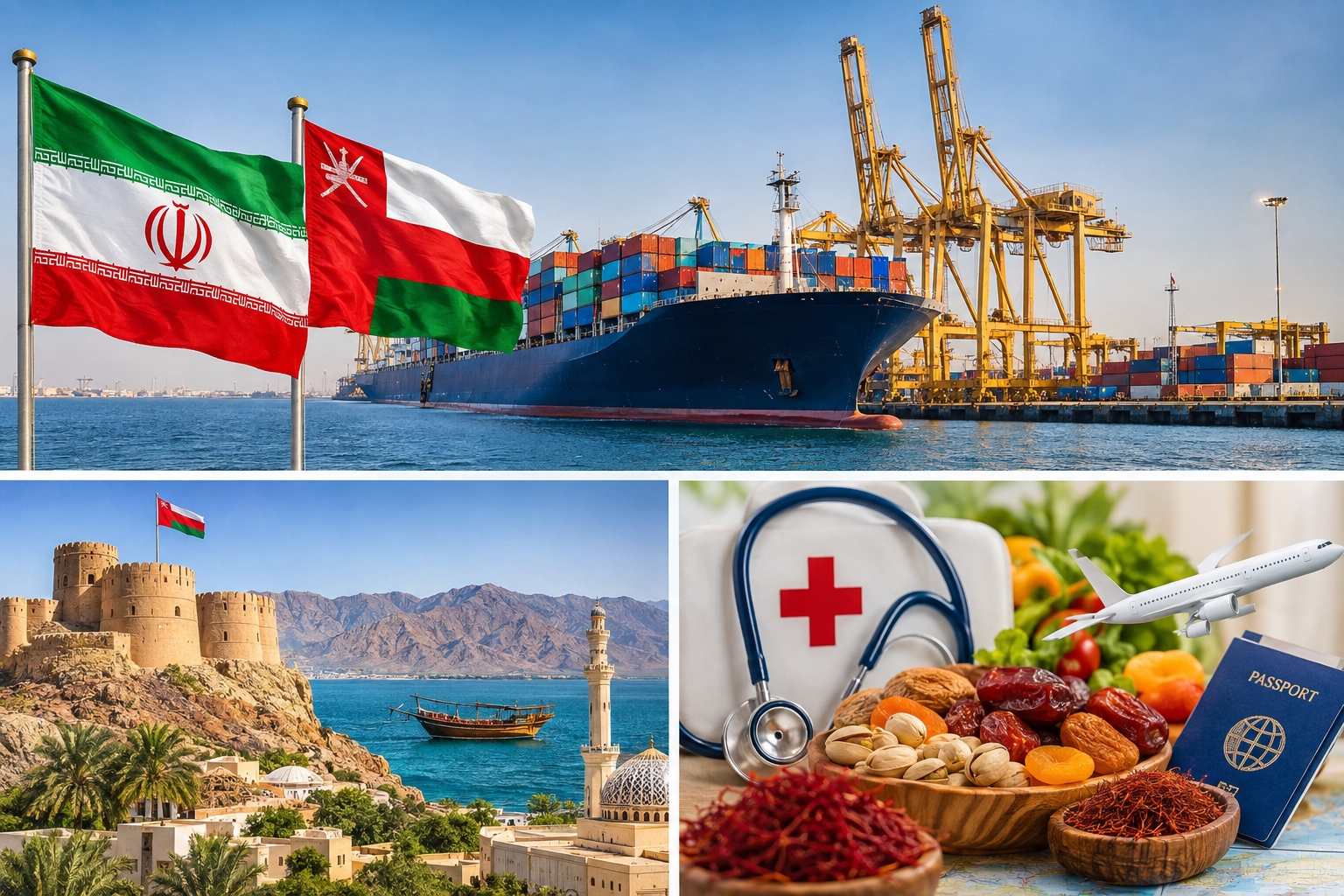
Iran and Oman have a long history of political, commercial and maritime relations. Their geographic proximity across the Persian Gulf and the Sea of Oman, combined with established diplomatic relations and maritime connections, has created opportunities for trade, investment, tourism, healthcare and business cooperation.
For companies, traders, service providers and travelers, the relationship between Iran and Oman goes beyond the exchange of goods. It also includes logistics, transportation, medical services, tourism, investment, industrial cooperation and opportunities for direct business partnerships.
A Long History of Relations Between Iran and Oman
The relationship between the two countries is deeply connected to the maritime history of the Persian Gulf and the Sea of Oman. For centuries, Iranian and Omani ports have been part of wider commercial routes connecting the Persian Gulf, the Indian Ocean and South Asia.
Ports and coastal communities on both sides have historically been involved in the movement of goods, people and commercial activity. This maritime background remains an important part of the modern economic relationship between Iran and Oman.
Political and Diplomatic Relations
Iran and Oman have maintained diplomatic relations for decades, with cooperation extending across political, economic, cultural and humanitarian areas.
Oman has traditionally emphasized dialogue, communication and diplomatic engagement in its regional relations. This approach has helped create an environment in which Iran–Oman cooperation can develop across trade, investment, transportation, healthcare and tourism.
In recent years, both countries have continued to discuss expanding economic and commercial cooperation and strengthening private-sector relationships. In May 2025, several agreements and memoranda were signed during the Iranian president’s official visit to Oman, covering areas including trade preferences, investment protection, customs cooperation and healthcare.
Trade and Economic Cooperation
Trade between Iran and Oman includes a broad range of products and services. Opportunities exist for manufacturers, exporters, importers, distributors, logistics companies, professional service providers and investors.
One of the important recent developments was the Iran–Oman Preferential Trade Agreement, signed in Muscat in May 2025 and subsequently ratified by Oman. The agreement is designed to promote bilateral trade through trade preferences, tariff reductions and the removal of certain non-tariff barriers for eligible products of national origin.
The agreement also provides a framework for further cooperation and trade liberalization and can support stronger supply chains and commercial connections between businesses in the two countries.
For businesses considering the Iranian or Omani market, it is important to examine product eligibility, rules of origin, customs requirements, licensing and other applicable regulations before starting an international transaction.
Maritime Transportation Between Iran and Oman
The sea is one of the most important connections between Iran and Oman. The two countries are located on opposite sides of the Strait of Hormuz and have access to important maritime routes in the Persian Gulf and the Sea of Oman.
Iranian ports such as Bandar Abbas, Bushehr and Chabahar can play a role in commercial connections with Omani ports such as Sohar, Muscat and Salalah, depending on the type of cargo, shipping service and current operating conditions.
Maritime transportation can be relevant for commercial cargo, food products, industrial goods, machinery, raw materials and other legally permitted products.
Because shipping schedules, port operations, customs procedures and regional maritime conditions can change, businesses should verify current shipping arrangements and regulations before making logistical decisions.
The Strait of Hormuz
The Strait of Hormuz is strategically important to both Iran and Oman. Its geographic position connects the Persian Gulf with the Gulf of Oman and the wider Indian Ocean.
For businesses involved in international trade, understanding the role of the Strait of Hormuz is important because changes in maritime conditions can affect shipping routes, transportation times, insurance and logistics planning.
Products and Goods Exchanged
Commercial opportunities between Iran and Oman can involve a wide range of products, depending on market demand, regulations and trade requirements.
Potential areas include:
-
Food and agricultural products
-
Dried fruits and nuts
-
Fruits and vegetables
-
Saffron and other agricultural products
-
Honey and processed foods
-
Fisheries and seafood products
-
Industrial machinery and equipment
-
Construction-related products
-
Raw materials and industrial supplies
-
Packaging and manufacturing equipment
-
Medical equipment and supplies
-
Professional and technical products
Companies should always verify import regulations, product standards, certificates, labeling requirements and customs procedures before exporting or importing.
Food and Agricultural Trade
Food products are among the areas where Iran and Oman can develop commercial cooperation.
Iran has a diverse agricultural and food-production sector, while Oman has an important regional position and connections with neighboring Gulf markets. This creates potential opportunities for exporters, distributors, wholesalers and food-related businesses.
Products such as dried fruits, nuts, saffron, fruits, vegetables, honey, seafood and processed food may be relevant to commercial cooperation, subject to the regulations of the destination market.
Healthcare and Medical Services
Healthcare is another important area of cooperation between Iran and Oman.
The two countries have discussed cooperation in healthcare, medical expertise, investment and medical services. Previous official discussions have also included areas such as medical tourism, specialized treatment, medical equipment and healthcare cooperation.
For international patients, Iran can offer access to specialized medical and dental services, while Omani and Iranian healthcare businesses can explore opportunities for professional cooperation, referrals, medical equipment supply and healthcare investment.
Medical services should always be arranged through licensed healthcare providers and in accordance with the applicable regulations of both countries.
Tourism Between Iran and Oman
Tourism provides another opportunity for closer connections between the two countries.
Travel between Iran and Oman can include leisure tourism, family travel, cultural experiences, nature tourism, business travel, medical tourism and visits to historical and religious destinations.
Iran offers a wide range of cultural, historical and natural attractions, while Oman is known for its coastline, mountains, deserts, traditional towns and distinctive cultural heritage.
The combination of geographical proximity and maritime and air connections can make Iran and Oman relevant destinations for travelers looking for new experiences in the region.
Visa and Travel to Oman
Oman provides online visa services, and Iranian citizens are currently included among the nationalities eligible for visa-free entry for stays of up to 14 days, subject to the applicable conditions. The 14-day visa-free stay is intended for eligible short visits and should not be treated as a substitute for a residence, employment or long-term business visa.
Travelers planning to stay longer or travel for employment, residence or other purposes should check the appropriate visa requirements before traveling.
Visa regulations can change, so travelers should verify the latest requirements through the official Omani authorities before making travel arrangements.
Residence and Business Activities in Oman
Traveling to Oman for a short visit is different from establishing a business, working or becoming a resident.
Entrepreneurs and companies considering activities in Oman may need appropriate commercial registrations, licenses, employment permissions, investment arrangements or residence permits depending on the nature of their activity.
Anyone planning long-term business or residence should obtain up-to-date legal and regulatory advice and verify requirements with the relevant authorities.
Opportunities for Iranian and Omani Businesses
The Iran–Oman relationship can create opportunities for businesses in several sectors.
These may include:
-
Import and export
-
Manufacturing cooperation
-
Food distribution
-
Agricultural products
-
Medical and dental services
-
Medical tourism
-
Industrial equipment
-
Logistics and shipping
-
Construction-related products
-
Professional services
-
Tourism and travel services
-
Joint investment
-
Distribution partnerships
-
Supply and sourcing agreements
For companies looking beyond domestic markets, direct communication with suppliers, manufacturers, distributors and service providers can be an important first step toward establishing commercial relationships.
Oman as a Gateway for Business Connections
Oman can be relevant to companies seeking commercial connections within the Gulf and the wider region.
For Iranian businesses, Oman may provide opportunities to develop relationships with Omani companies, distributors, service providers and investors. At the same time, Omani businesses can use direct contact with Iranian manufacturers, suppliers and service providers to explore potential sourcing and cooperation opportunities.
The official discussions between the two countries have also highlighted the importance of connecting economic corridors and ports and developing joint investment and private-sector cooperation.
The Role of Dubai Parsi
Dubai Parsi is a business and classified-listing platform designed to help Persian-speaking and international users discover products, services, businesses and commercial opportunities.
For Iran–Oman business relations, the platform can provide a space where Iranian and Omani businesses can introduce their products and services and establish direct contact with potential customers, suppliers, partners and distributors.
The goal is not to replace formal trade procedures or commercial contracts. Instead, it is to make business discovery and direct communication easier.
The Future of Iran–Oman Commercial Relations
The future of Iran–Oman economic relations can involve more than traditional import and export.
Trade facilitation, logistics, industrial cooperation, healthcare, medical tourism, tourism, investment and private-sector partnerships can all contribute to broader commercial connections.
The Iran–Oman Preferential Trade Agreement and other cooperation agreements signed in recent years provide an additional framework for expanding economic relations. However, individual businesses still need to evaluate regulations, costs, logistics, market requirements and commercial risks before entering a transaction.
For companies and entrepreneurs, the most practical starting point is often identifying the right supplier, customer, distributor or business partner and establishing direct communication.
Ref. source : Dubai Parsi
Similar Articles
ُStory of Sunken iPhones in the Persian Gulf
s it still possible to migrate to the UAE? Has export to Dubai stopped?
Oman vs. UAE: Why Oman Could Become an Attractive Investment Destination in the Coming Years
Home / Articles


Join Dubai Parsi on Social media
